

Spirited Competitor

Lee Stadem, 89, Sioux Falls, South Dakota
You might say Leroy “Lee” Stadem has a reverence for sports and fitness. He believes that keeping active is a necessary component to living a full life mentally and spiritually, and he considers himself a humble example for others to follow. A big reason for this modesty is because Lee served as a Lutheran minister for more than six decades in and around his home state of South Dakota.
Lee played and competed in any sport that was available when he had a chance, which was somewhat challenging for a lad growing up on a rural farm. After military service and college, he discovered a love for tennis and table tennis. When he heard that his state’s department on aging wanted volunteers to help organize Senior Games, he and a friend traveled to the capital and became part of the founding board, and the first South Dakota Senior Games began in 1984.
When the inaugural “National Senior Sports Classic” was announced to be held in 1987, Lee signed up and traveled to St. Louis with his buddy to participate. Thirty years later, he hasn’t missed a single one of either his state games or National Senior Games. When Elisabeth, his wife of 62 years, tagged along for the 1991 Games in Syracuse to see what the fuss was all about, she decided she could compete too. She has also made every trip since then, first as a swimmer, and then finding her groove with shuffleboard and horseshoes. In our conversation with Lee that follows, he says her participation helped keep him going to National Senior Games, partially because he would have felt selfish doing it without her.
The soft-spoken man with a broad smile also likes the social aspect of sports, preferring those that involve partner play. After struggling early to find suitable partners to qualify and travel with him for national competition, Lee played against Royal Smart, who came to South Dakota from Illinois to qualify for the 1993 Games. They decided to pair up for the trip to Baton Rouge. Despite a family emergency that pulled Royal away in the middle of their first competition together, the men created a lasting bond and have remained playing partners to this day.
Lee has maintained good health as a senior, although a bum knee threatened to keep him off the field at one point. After a knee replacement, he hasn’t had any further problems. However, after taking his “re-retirement” last November, he had to deal with a shingles outbreak, and then recently found out that he has a cancerous tumor in his intestines. The good news is that it was not an aggressive type, and after surgery he feels good about being ready to play when the 2017 National Senior Games presented by Humana kick off in Birmingham. His surgeon also noted that Lee’s excellent physical condition greatly increased his body’s ability to bounce back.
In 2014, Lee wrote a guest column for his local newspaper entitled “Can God Bless Our Leisure?” In it, he made the following recollection: “60 years ago in our homiletics class at seminary, our guest lecturer for our senior class was a pastor of a mega congregation in Minneapolis. I won’t forget this part of his lecture when he said, ‘I’d rather burn out than rust out.’” Lee Stadem is still burning strong as he continues to pursue his Personal Best.
Let’s start with where you live, Lee. Are you a native of South Dakota?
Yes. I grew up on a farm in Bryant. It’s a small community, and I worked on the farm during the summer school breaks. I’m the youngest of nine children. I had seven great, wonderful sisters and one brother. I enjoyed being on the farm. Our folks were great people, and we enjoyed having them around for many years.
Working a farm will keep you in shape. Did you play sports growing up?

1992 feature in Sioux Falls Argus Leader
I love sports, and have always played sports. I attended a small private Christian high school so we played intermural sports. I played everything they had.
Then I went into the Navy. World War II ended in August of 1945, and I turned 18 in October. I wanted to be in the same branch of service as my brother. It was a two-year enlistment, and there wasn’t much chance to play sports while I was in there. When I got out I ran the family farm for a short time, but I thought if I was going to be a farmer I didn’t want to be a bachelor farmer, so I decided to go to college. I went to Augustana College in Sioux Falls. I went out for football and that was my biggest claim to fame there. Any time I had the chance, I did something in sports during my life.
How did you hear about Senior Games?
There was a notice in our hometown newspaper asking interested seniors 55 and over to come to the state capital in Pierre. There was a lady with the state Department on Aging who wanted to form a group to create Senior Games for the state. There was no organization but she took it upon herself to get it started. I went down there with Glen Peterson, whose main event was race walking. A small group of us met and formed a board to get things organized, and we had our first games in 1984.
When we heard about the first national games coming for 1987 Glen asked, “Why don’t we go down to St. Louis and compete?” We did, and we enjoyed it very much, so we went back again two years later, and went on from there. Glen is now deceased.

Lee and Royal Smart at 2009 Games in Palo AltoWhat sports did you play?
Well, I entered various sports in the state games. It wasn’t that I was very good at them, but there were so few of us that it wasn’t tough to get qualified. I’ve always played table tennis, and have done that for Nationals all through the years. I picked up tennis and that’s been my other sport. I just love playing them.
Now, those are both partner sports, and it was a problem at first to get partners lined up for Nationals. I’d qualify with people here, and we’re playing pretty good, and for one reason or another they would bow out from going. It was a discouraging thing to try to find a good partner, being in a small state like this. So, I changed my philosophy and didn’t think about winning a gold medal, but just to go and enjoy competing.
I did finally find a partner to play both tennis and table tennis with. His name is Royal Smart, and he lives near Chicago. I’ve just been to the South Dakota games, but he goes to several Senior Games around him. I competed against him in tennis in South Dakota, and we decided to be partners and went to Baton Rouge in 1993. That first time we were doing really well, but Royal had a family emergency and had to leave to take care of both his wife and his mother. That was a downer, but we didn’t give up on one another and have been partners ever since. We did get some medals over the years, but the best part is that we can depend on each other to always be there.
Speaking of always being there, you are among a group of only eight athletes who have gone to all of The Games.
That’s interesting that the number is that small now. We had a gathering in Louisville in 2007 where they brought everyone who had been to all them onto the stage. We had a whole bunch there at that time.
That just means you’re going to get that much more love this time in Birmingham.
Well, my wife Elisabeth and I are sure looking forward to it. Some of my relatives are coming. One has volunteered to drive us there, and another lives in Atlanta and told us to come over and stay when we have a couple days off.
So, your wife competes too?

Lee and Elisabeth at 2013 Games in Cleveland
Yes. When Glen and I went to Syracuse in 1991, she was too young to be in it, but she wanted to go with us. She wanted to see Niagara Falls which wasn’t far away. She saw what was going on at The Games and on the way home she said, “I can do those things.”
Liz has competed in swimming, but likes shuffleboard and does well in it. She also plays horseshoes, and hasn’t missed any Games since she began.
We’ve been married for 62 years, one less year than I’ve been pastoring. She’s been a very supportive part in all of this. It’s been a big encouragement for me that she does the sports too. If I was just doing this by myself I might have felt quite selfish. We’ve made a lot of friendships, especially in our state.
Let’s go back for a moment. You were a pastor for your career?
Yes. I majored in sociology and philosophy at Augustana, and before I graduated one of the professors asked me, “Have you ever thought about entering the ministry?” I really hadn’t. He said, “I think you should.” I qualified to start at Luther Seminary in St. Paul, Minnesota. I had three years of study and one year of internship.
When I retired at 65, I was asked if I was interested to be on call for my parish. I continued as an interim visiting pastor. I went to a lot of places around South Dakota until I retired for good, and I really enjoyed it. I worked with St. John American Lutheran Church for quite some time, and they gave me a nice party in November and presented me with a cake that said “Happy Re Retirement.” [Chuckle]
I’m now looking forward to doing some special things. In 2018, our family is going to celebrate the 100th anniversary of the year my parents bought the family farm. One of my sons grew up enjoying selecting devotionals. He wants to put together a booklet of them, with one for each day in the year. He’s given me the assignment to write up one devotional for each week, so I have to prepare 52 of those. I’ll get started when I get over these medical things that have come up.

We know our interview was delayed because you had a bout with shingles over the holidays.
Yes, and it’s still bugging me. I had the vaccine shot back in ’08, but I still got it. I’ve got pain on the back of my head and on my right side, and frankly it’s disgusting! [Laugh] But it’ll pass, and I’ll hang in there. I did have to drop out of tennis during this time, but I’ve talked with all the fellas and I plan to get back to it. We have a good place to play, and I’ll just need to get my legs back in shape.
I also just recently had something else to deal with. They found a tumor where the small intestine joins with the large. It was the size of a tennis ball and a form of cancer, but the doctor said I shouldn’t worry because it’s not the type that moves quickly and it just needed to be removed soon. I’ve had the procedure and things are looking good now.
When I went in for the PET scan and got my news, the doctor told me, “I can sure see that you’ve been very active. I don’t think there’s going to be any problems with your heart and for your body to be able to recover.” He knows about how important the Senior Games is for me, and he thought I’d heal in time. I am feeling good now, I think it’s good news.
You have been fortunate to have good health all of those years.
Yes. I did use a brace on my knee for several years. Every step got to be painful. A man saw me hobbling after a competition and showed me the scar on his knee. He said, “You should look into having a knee replacement.” I did get that done, and I haven’t had a speck of pain since then. It’s been miraculous, really.
You’ve spent a lifetime ministering to souls. Do you see physical activity and sports as also helping with a person’s mental and spiritual well-being?
I think they are closely related. You should do what glorifies yourself, but there are more important goals than just winning. We all love to compete and win those medals, but I tell everyone I play that we are all winners. Faith in the Lord makes us a winner already. My wife and I feel that way.
It’s certainly in our Scripture. We are commissioned to work in the Kingdom, and we’re expected to take care of our bodies. I believe I have been an example to show the importance to do that. For the people who go to Nationals from my state, I like to remind that we represent South Dakota and we should do the very best we can. It’s great to march in together to do that.
Of course, staying healthy is always the goal.

It has been my goal. I play tennis three times a week, and table tennis two or three times a week. I also like to hunt, and have done it in some tough places in the mountains and south of the Tetons. My conditioning with sports has surely helped, and I don’t imbibe in smoking or drinking. Liz has been very helpful for me, being involved too. She regularly bowls and does water aerobics.
It seems logical that your sporting activity has contributed to your longevity.
Oh, I think it has. It surely hasn’t hindered my health in any way. My mother died with she was 98, and my father lived to be 79. I’ve already outlived him, so that’s for sure.
Even though winning is not the main reason to stay active, if we’re going to compete, we need to stay in shape. Regular exercise is very important in our lives. When Liz and I go to a church event and they’re having a volleyball game, we don’t get all stiff and can enjoy participating.
Does it surprise the younger ones when you can get out there and knock the ball around?
I think they really are surprised. People say it’s great that we can still do all of this. I believe we are setting an example. Everyone doing this is setting an example.
- Published in 2017 PB, Personal Best Featured Athletes
Still Rollin’

Hazel Hassen Bey, 93, Montclair, New Jersey
In sports, sometimes the story is about amazing feats of skill and glory. Other times, it is about how an athlete overcomes obstacles to persevere in an inspiring display of courage. Frequently, such challenges come off the field of play, as in the case of Hazel Hassen Bey.
Of eight athletes who have competed in every National Senior Games since 1987, Hazel is perhaps the most surprising to have achieved perfect attendance. The retired licensed practical nurse has been bowling since her late husband bought her “a real ball” over 60 years ago. She loved league play, and in 1984 started going to the US Bowling Congress (then called Women’s International Bowling Congress) national tournament. She hasn’t missed one since. She and her doubles partner then read a flyer about New Jersey Senior Olympics and the first national games for seniors being organized in St. Louis, and after trying them out both events became must-go competitions. In fact, Hazel has not missed any of the three events for more than three decades.
What is most remarkable about this achievement is that, since 1992, Hazel has had to manage chronic rheumatoid arthritis. She considers herself blessed that it affects her legs, feet and toes the worst, and that her hands and fingers have remained able to handle a bowling ball. Because of balance issues, she now stands at the line to deliver the ball. Every day is a battle, but Hazel does her leg exercises each morning to get out of bed and get on with her life. She refuses to let a little pain keep her from doing what she wants to do. The ball keeps rolling.
Further injuries from a car accident in 2014 almost ended Hazel’s sporting career, but she has bounced back. The accident was not her fault, and she still drives herself to play in local leagues twice per week. As she looks forward to coming to Birmingham for the 2017 National Senior Games presented by Humana, her biggest concern is not about her health or getting herself there; it’s about finding a doubles partner to go with her.
Hazel is the perfect example of a Personal Best athlete achieving optimum quality of life by never giving up. As you read through the following conversation, imagine a humble church-going lady, the type who never says a bad word but always speaks her mind. The type who uses faith and self-reliance to take on anything life hands to her.
Life handed Hazel Hassen Bey a bowling bowl, and by God, she’s gonna roll it!
Hazel, first off we want to ask about your unique last name, Hassen Bey. Why is it two words?
My husband Mamode was from Mauritius in the East Indies. That was the family name. It’s like McDonald or O’Conner, that’s how I explain it to people. Mamode was a meteorologist in the Air Force. Unfortunately, he had diabetes and died in 1966.
Did you ever remarry?
Nooo! I couldn’t find nobody like him. Nobody would treat me like he did. [Laugh]
What did you do for a career?

1952 wedding photo
I was a licensed practical nurse. I went to a school in Pittsburgh. I worked with elderly patients at Preakness Hospital in New Jersey for 30 years. It’s called something else now. Then I worked for the Daughters of Israel in West Orange part-time for 16 years. I retired around 2000 I think. I have trouble remembering things sometimes. I’m 93! [Laugh]
Let’s go to the beginning. When did you first start bowling?
I wasn’t even a teenager yet. I’m from Pittsburgh, and I began with it there. I was from a big family. There were five girls and four boys. I was the first girl, and the fourth child. We lived outside of town, and we didn’t have money to pay for stuff. So, we kids would run down to the bowling alley to watch, and this wasn’t bowling using the big ball with the holes. The balls were smaller, and you rolled them by hand. After hanging around for a while, people would sometimes ask if we wanted to bowl a game.
Did you play any sports as a youth?
No, our high school was way out in the country. I was the oldest girl, so I had to be home after school to help take care of my brothers and sisters. I had to hang onto them and help everyone get fed. My mother had to get some rest sometime! [Laugh] But we did play basketball, and liked to go to the parks with church groups and hike around.
When did you begin to bowl regularly?
I didn’t start really bowling until after I got married to in 1952, and I had my daughter Kismet in 1954. My husband found a job on Long Island and brought us up from Pittsburgh in February of 1955.
Mamode was from New Jersey, and so we moved to Patterson in 1957. Well, during that time he bought me a real bowling ball and said he wanted me to get in a league. I said, “Oh no, I’m not that good!” and he answered, “You don’t have to be that good.”
He taught me how to do a hook ball, because my ball was always going into the gutter. I kept on trying and trying, and finally got better.

You have been bowling for more than 60 years now. You’ve been in every National Senior Games over the past 30 years. What has motivated you to keep up the streak?
I like to take the trips! [Laugh] I look forward to going to bowl in the New Jersey Senior Olympics every year, and then traveling to the Nationals every two years.
I have also been going to the [U.S. Bowling Congress] women’s national bowling tournament every year. In fact, I started going to those three years before the Senior Olympics started. And I’ve made every one of those, too!
Wow, perfect attendance for three decades in all those events! How did you first find out about Senior Games?
My league partner Elizabeth Cook and I always looked through whatever flyers they had at the bowling alley. I saw something about senior games, and I told her, “Hey, this is interesting. Let’s try it.” We did, and we just kept going. Elizabeth bowled with me until she couldn’t bowl no more, which was when she was 90. The Games in Pittsburgh [2005] was her last time to go. I didn’t quit when I turned 90. [Laugh] But I always go with someone.
I also played horseshoes at Nationals, but when they were scheduled at the same time as bowling one year, I stuck to the bowling.
Have you had a regular partner since then?
Not really. It was always Elizabeth and I, and now I go to the Nationals with others from here. There’s a big group of bowlers from East Orange that go. I also had two others that have been my partner for the New Jersey Senior Olympics, and that was Susie Wilkerson and Pauline Dzanewicz. Pauline bowled with her mother in them before her mom died.
Now, I’ve bowled doubles with Martha White from New Jersey quite a bit. She’s younger, like 77 or 78, so I have to play in her age group. I only play in my own age group when I do singles. But we usually come out with a medal at Nationals.

Hazel and longtime partner Elizabeth Cook, 2004Do you feel like you’re Martha’s legal guardian, playing down three levels in age like that?
I feel like I’m legal guardian to ALL of them in our bowling leagues now! [Laugh] Actually, there’s a husband and wife who are around 95 and still bowl in my league in Bergen County.
I’m not the best bowler. My score has gone up over 150 at times. But after my car accident in 2014 I can’t seem to get anywhere near that anymore.
Oh my, what happened to you?
A bus hit me on the driver’s side of my car. It wasn’t my fault. I didn’t bowl for many months. The worst injury was to my left shoulder. It still hurts at times, and they keep wanting to push needles into me. I told them, “I don’t need the needles, I’ll just do my exercise.” I don’t know how long I’m gonna live, so I’m gonna do what I want to do! [Laugh] But, I took my time and didn’t take chances trying come back too soon and having a relapse. I’m doing pretty good now in my league-but maybe that’s because everyone else is all bad at it, too! [Laugh]
Have you had any other challenges like that?
Oh, yes. In 1992, I started having arthritis. I put my feet down off the bed one day and hit the floor so hard I could hardly see. I thought I was going to die. I couldn’t even walk. I pulled the phone over by the cord and called my daughter Kismet. She didn’t have a key for the door, so I dragged myself across the floor and fell asleep on the door until she came.
Are you still dealing with arthritis?
Yes, it’s rheumatoid arthritis. You know, my hands aren’t crooked up at all, but my toes and my feet give me aches and pains all the time. You need those feet to walk. This morning, I didn’t even know if I could get out the door. But I told myself, if my feet can push those pedals on the car, I’m going bowling. And I did! Now, I don’t drive at night anymore, but I can when it’s light out.
Well, you need those feet to make your bowling approach too.
No, no, no. I walk up to the line with the ball. If I do that three-step thing I’d fall on my face with my balance problem. I can’t walk straight without a cane.
It’s amazing how you are overcoming all of that to be able to keep doing what you love.
I try. Hey, the good Lord knows what He wants for His children.
If I see I can’t do something right now, I give it a rest and try again. If my foot gives me trouble, I just think it needs some exercise. If I feel so bad I can’t go out for my league, I’ll call and tell them I don’t feel good and when I feel better I’ll let them know. I don’t want people checking in all the time to see how I’m feeling. Let ME tell you how I feel.
You get big credit just for showing up, Hazel. It’s helping to keep you fit and healthy.
That’s right, I’m gettin’ my exercise, because that’s what I need. If this was just about getting medals I wouldn’t be there!
What do you tell others about staying active?
You know, there’s a lot of things to do out there. Get up from your television. You can walk to the library or to your church. Do what keeps you going.

NSGA CEO Marc T. Riker visits with Hazel at the 2014 New Jersey Senior Olympics in Woodbridge Township.
How often do you bowl now, and how do you keep your body in shape?
I bowl twice a week, on Thursday morning here in Essex County with all women, and Friday at noon in Bergen County. That one is senior men and women.
I do exercises with my legs in the morning and at night. I have to do it in the bed before I get up in the morning, because otherwise I know I’ll have trouble with my knees and my feet, and I’ll be falling all over the place. I make sure if I’m going to fall that I can grab onto something to where I don’t break anything. Knock on wood, I haven’t had a bad fall yet. [Laugh]
I do things other things to get out. I’ve taken up knitting with a crafting class at Trinity Presbyterian Church. I make hats, and I’m trying to learn quilting, although I’m not that good at that yet.
It’s great that you find the strength to fight it. How hard has it been to pull everything else together to get to all of your games, including the travel expense?

Hazel in 1989
I’ll tell you about me. Every time money comes in, a piece goes on the side. I never have to worry about finding money to travel to these games. People say, “My money’s gone already!” and I keep telling them it doesn’t have to be gone. If you put one dollar down, fifty cents even, that’s more than you had before you saved it.
You are quite an inspiration, Hazel.
People do say, “You’re an inspiration. You go bowling and go to church and get around. Most people your age are in the hospital.” It’s OK. In my family, we were brought up being told, “What is going to be is going to be.” My parents taught us that we weren’t greater or bigger than anybody, and we weren’t lower than anybody. They told me to do what I can do, but not to make it like, “I’m the queen.” So I just do what I can do, and it’s OK if people think I’m an inspiration.
So, how long are you going to keep bowling?
I’m gonna tell you just like I told my doctor. He asked me, “Hazel, how long are you going to continue to bowl?” I told him, “Until I walk up to that line, they hand me a ball and I drop it, and it goes where it wants to go.” He said, “You’re kidding!” I said, “No I’m not. If I can get to that bowling alley and get up to that line, I’ll roll that ball.”
What is it that inspires or motivates you to keep trying, and to keep that ball rolling?
Life itself. [Pause] What’s the alternative? What you gonna do?
- Published in 2017 PB, Personal Best Featured Athletes
Activity is Building In Birmingham
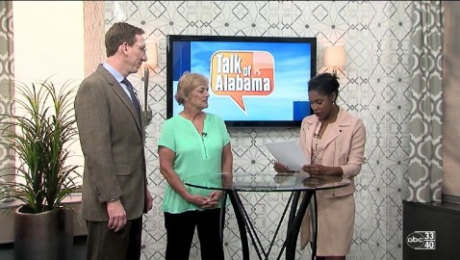
 National Senior Games CEO Marc Riker visited Birmingham this week to prepare for the 2017 National Senior Games presented by Humana! He teamed up with local athlete Jan Hinson to promote the Games on Talk of Alabama: ABC 33/40. Interested in volunteering? Visit nsga.com/volunteer #seniorgames2017
- Published in News and Events
The Long Run – March 2017


- The Travel and Lodging page offers much more than just the best hotel options. There are also discounts for flights with Delta, Southwest and United, and for rental cars with Alamo and National. Take advantage of the deals!
- Athletes are using our redesigned Team and Partner Finder page to make connections. Create an account and post under the sport where you wish to find a partner/team member.
- As reported last month, a complimentary NSGA Courtesy Transportation Shuttle Service will run to the Birmingham CrossPlex, Samford University and Birmingham Southern College from the Birmingham Jefferson Convention Complex (BJCC) in downtown Birmingham. Visit the page to find schedules and information.

 Make “Vrooom!” to See Barber Motorsports Museum
 HUMANA Heroes: Athlete of the Month
 NSGA Online Merchandise Store
- Published in Newsletter
“Motivated by a Memory” – March 2017 Athlete of the Month

Whitman “Pete” Cross, 85, Charlottesville, Virginia
During this 30th anniversary year, NSGA has asked athletes to send in their favorite “Memories of the Games” to share on our website and on our National Senior Games Instagram and Facebook pages. One came from a brand-new competitor whose memory goes back to 1987. An excerpt:
“I never realized until recently that I had watched the first [National] Senior Games in St. Louis. That year, I was in town for a business conference and heard about The Games, so I spent an extra day there just having the greatest time watching folks enjoying themselves. Now, this year I find myself entered to play pickleball in Birmingham where I lived for 15 years! It would appear that I just took a bit longer than most seniors to finally compete!”
Why did it take 30 years to get into The Games? Whitman “Pete” Cross tells us that while he has been exercising and playing recreational sports since witnessing that inaugural senior spectacle, his busy career kept the idea of competing in sports out of his mind.
He also never considered himself a great athlete. Growing up in Philadelphia, Pete played soccer through high school and says he was lucky to continue to play at the University of Virginia. “That was 1950, when soccer was just getting started at that level. If you could just kick the ball, you made the team,” he recalls with a laugh. “I couldn’t make water boy on the bench the way they play now.”
His graduate degree workload and career demands sidelined sports for several years, but a book put Pete back on track. “Along comes [Dr. Kenneth] Cooper’s famous book “Aerobics” in 1968. That was my Bible, and I started running for fun.” At age 50, he moved to Birmingham, Alabama to run a science museum and began to work out regularly to tone his body. His growing interest in fitness and health drove him back to college and to several certifications so that he could work in this field when he retired to Charlottesville, Virginia in 1998.
Pete walked into a part-time job 18 years ago by telling the owner of a company that had just built a large wellness facility that the burgeoning senior population required trainers with wrinkles. He began work with a medically-oriented fitness program that is now licensed by other clubs around the country.
Four years ago, he picked up pickleball as it rose in popularity in his area. “I had some recreational background in tennis and squash, so it was just perfect for me. I thoroughly enjoy it,” Pete says. His first competitive tournament experience was the Virginia Senior Games at age 84, where he qualified for the 2017 National Senior Games presented by Humana. His early memory of The Games, coupled with his past connection to the city where it will be held, prompted him to go all-in.
He is determined, but somewhat daunted, by the pickleball skills he sees. “It’s incredible at the highest levels,” he observes. “You just wonder how a guy can hit the ball, spin around twice and make the next shot.”
- Published in Athlete of the Month