

Invest in Preventive Health to Stay in the Game
By Andrew Walker, MPH; NSGA Director of Health & Well-Being
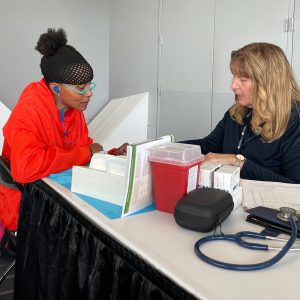
An athlete participates in a heart health screening at the National Senior Games in 2023.
As a Senior Games athlete, you are already getting health benefits from participating in sports. Staying active goes a long way toward lowering your risk for chronic disease and keeping you feeling strong. But even the most dedicated athletes aren’t immune to injuries, illness, or mental well-being challenges.
Avoiding preventable illnesses and injuries helps you stay in the game. Wellness services are priceless to older adults because they decrease time away from the things you love due to preventable illness.
Don’t Skip on Immunizations and Screenings
Consider the experience of legendary runner and Senior Games supporter Kathrine Switzer. A few years ago, she was sidelined by shingles, a painful condition that kept her from training and competing. Shingles is often preventable with a vaccine that’s widely recommended for older adults.
In addition to immunizations, regular health screenings are another powerful tool. They can catch issues early, sometimes before you even notice symptoms, when treatment is often more effective.
For example, early detection of colon cancer can make a significant difference in outcomes. And if certain conditions run in your family, those screenings become even more important.
Accessing Preventive Services
Knowledge is power in managing your health care. Resources like the Kaiser Family Foundation’s Preventive Services Tracker can help you understand what’s available and covered for each condition under the Affordable Care Act.
Medicare and Prevention: What to Know
If you’re on Medicare, you have access to a range of preventive services. The National Council on Aging suggests keeping the following key considerations in mind when accessing Medicare preventive health resources:
- Preventive care is covered whether you have Original Medicare or a Medicare Advantage plan.
- Some services are offered during regular visits—for example, your Annual Wellness Visit is covered at no cost.
- Medicare doesn’t cover a traditional annual physical, but it does include a one-time “Welcome to Medicare” visit and yearly wellness visits focused on prevention.
- It’s always a good idea to talk with your provider ahead of time so you know what to expect, including any potential costs.
Prevention Provides a Positive Return
Because of their effectiveness in reducing the cost of illness, many preventive health services and wellness screenings are provided at no cost. Some insurance plans even offer a financial incentive to use these benefits!
However, the return on investment of a prevention mindset goes beyond dollars and cents.
A prevention mindset helps you maximize your quality of life and healthspan while also providing a solid foundation to prepare for an outstanding Senior Games performance.
- Published in Health & Well-Being
Active Recovery: Speed Up Healing with Tai Chi and Qigong
By Andrew Walker, MPH; NSGA Director of Health & Well-Being

You train hard to be the best you can be in your sport. But do you spend enough time on your workout recovery?
Athletic fitness is built through the process of exercise overload, where we gradually increase the duration, amount and frequency of exercise. A good training program allows our body to handle incrementally greater amounts of work.
Our bodies adapt to the stress of workouts, and our muscles, bones and cardiovascular system increase their capacities. Over time, we can exert more strength and perform at a higher intensity. Simply put, we’re more fit!
Recovery is Essential to Training
A key element in this process is rest and recovery. Athletes who want to optimize their conditioning process to qualify for the National Senior Games need to include healthy workout recovery strategies in their training programs.
In addition to sleep, our bodies need an appropriate mix of low- and high-intensity workouts to replenish energy stores and support muscle recovery and growth. Being mindful of effective post-workout recovery is essential.
Including active and passive recovery strategies supports the adaptation and overload process.
Examples of passive recovery are:
- Massage guns
- Cold and heat therapy
- Therapeutic massage
- Assisted stretching
Common active recovery strategies include:
- Low-intensity workouts
- Body weight workouts
- Walking
- Light jogging
- Cycling
These activities create movement, increasing blood flow throughout the body.
Tai Chi as a Workout Recovery Strategy
Although not commonly considered active recovery, Tai Chi and Qigong meet the criteria for effective recovery strategies. They increase circulation enough to facilitate the movement of nutrients needed for the repair and growth of energy systems, bone, connective tissue and muscles.
Existing for centuries, Tai Chi for health and Qigong are series of movements commonly used for health and healing in traditional Chinese medicine (TCM). Research has found both are beneficial for health and well-being. Tai Chi for health is rooted in the internal branch of Chinese martial arts known as Tai Chi Chuan.
Tai Chi for health is a series of movements that flow from one form to another. When practiced primarily for health, Tai Chi can be considered a form of moving Qigong.
This continuous movement over several minutes makes Tai Chi an effective recovery activity to integrate into one’s overall training plan.
Learning Tai Chi for Health
It is best to learn both Tai Chi for health and Qigong from a teacher. Look for classes at Chinese martial arts schools and cultural centers, recreation centers, YMCAs, and in community education classes at colleges, hospitals, and HMOs. The Arthritis and Parkinson’s Foundations also offer Tai Chi for health.
Online introductory resources include the following.
- For an introduction and a free lesson, watch the “Tai Chi for Beginners Video” by Dr. Paul Lam.
- For more on Qigong, see “Qigong: What You Need to Know.”
- National Veteran Golden Age Games athletes can get specific Tai Chi for health information from the Veterans Administration here.
Tai Chi for the Long Run
In addition to being a great training recovery strategy, Tai Chi Chuan is one of the newest National Senior Games sports. It will be an Open Sport for the 2027 National Senior Games, meaning anyone age 50 or older by Dec. 31, 2026, can compete.
Tai Chi Chuan is a perfect second sport to add for the 2027 Games. Athletes can participate in Tai Chi Chuan across a lifetime (the oldest competitor at the 2025 Games was 93!) – extending your Senior Games journey for the long run.
- Published in Health & Well-Being
Protect Yourself from Health and Fitness Misinformation and Fraud
By Andrew Walker, MPH; NSGA Director of Health & Well-Being
Health fraud, false fitness claims and scams cost older adults billions in financial losses and unnecessary distress.
A scam recently affected a member of the National Senior Games Association, the National Veterans Golden Age Games, whose event is free. A consumer alert from the Federal Trade Commission found that Veterans are reporting websites or social media pages that charge a fee to register. These sites were found to be fakes.
How to Spot Health Misinformation
Knowing what questions to ask is an essential consumer health skill. The National Institute on Aging (NIA) suggests using the following questions to assess online information.
- What is the purpose of the website, and who owns or sponsors it? Knowing this background helps you understand whether the website’s motive is to provide unbiased content or to generate more sales.
- Who wrote the information? Who reviewed it? This is important because the site’s content should be provided by one or more experts in the field and not based on testimonials.
- When was the information written and updated? Science changes over time, and it’s essential to have the most recent evidence.
- Does the website offer quick and easy solutions to your health problems? Does it promise miracle cures? Confirm unique cures with licensed health providers.
The above questions can also apply to social media. Asking the right questions is important when it comes to social media fitness trends. It acts as a check on influencers, keeping them accountable, especially when they reap financial benefits.
According to the NIA, no government agency approves ads before they go public. They note that Federal law requires sellers that market cures to have scientific evidence to back up their claims, but dishonest companies might not. Ads must be truthful — not misleading.
For reliable sources of information about diseases and their treatments, the FTC recommends that you visit:
- MedlinePlus.gov, a site operated by the National Institutes of Health (NIH)
- NIH’s National Center for Complementary and Integrative Health, which has information about alternative and complementary medicine
- Healthfinder.gov, a trusted Health and Human Services site
We can’t prevent all fraud, scams, schemes and losses; however, strong consumer health skills increase the odds in your favor. The FTC encourages you to share your wisdom about avoiding swindles and fraud with the older adults in your life.
Pass It On: Fraud Education Campaign for Older Adults
You can take action to help others by being part of Pass It On, the FTC’s fraud education campaign for older adults. It has clear, direct advice about more than a dozen fraud topics.
At ftc.gov/PassItOn, you can:
- Read articles
- Download resources, like activity sheets and bookmarks
- Watch videos about frauds that target older adults
Too Good to be True!
Avoiding exploitation comes from applying common sense and accumulated wisdom. It reminds me of a time-tested adage that holds true today: if it sounds too good to be true, it’s probably not true!
Applying this adage and practicing consumer health skills will reduce your chances of being a victim of health schemes and misinformation.
- Published in Health & Well-Being
Use the Wellness Compass to Achieve Your Senior Games Personal Best
By Andrew Walker, MPH; NSGA Director of Health & Well-Being
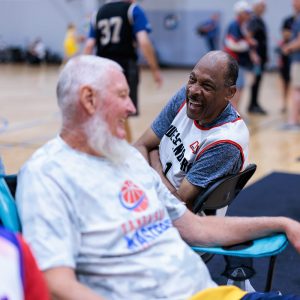
Last month’s health and well-being blog focused on adopting a whole-person mindset that positively impacts athletic performance. The Wellness Compass tool was shared as an easy-to-use method for assessing overall well-being.
Now, let’s take a deeper dive into the benefits of completing this resource and following it up with the SMART Step Worksheet. The Worksheet guides you in creating a well-being goal, which can help you in reaching your Senior Games personal best. Both resources are linked at the end of this post.
Understanding the purpose behind an assessment is essential. Many people feel uneasy or resistant when asked to complete tests or evaluations. The Wellness Compass encourages personal growth without judgement.
It highlights your strengths and provides an opportunity to select an area for improvement in a supportive way. The assessment is simply a snapshot of where you are right now, offering encouragement and insight into your potential for growth.
Benefits of Using the Wellness Compass
Taking time to slow down and complete the assessment can increase self-awareness and help you focus on healthy changes. According to the designers of the tool, additional benefits include:
- Scores are not labeled as “good” or “bad”
- Promotes self-awareness and insight
- Identifies areas of well-being that may need more attention
- Shows how different aspects of wellness are interconnected
- Reveals opportunities for growth
How the Assessment Works
The Wellness Compass explores eight areas of wellness. After responding to all the questions in the digital tool, your results will automatically tally and generate a visual summary. You can also manually add your scores if using a printed version.
Take Action with the SMART Step Worksheet
The SMART Step Worksheet helps you choose an area to improve. Enhancing one area positively impacts others. A practical approach is to select an area you feel motivated to work on within the next 30 days. Applying the SMART Step process helps you create goals that are:
- Specific
- Measurable
- Achievable
- Relevant
- Time-Limited
This process also asks you to consider potential roadblocks and to identify an accountability partner to support your progress.
Completing the Wellness Compass assessment and making a change in just one area will increase your whole person well-being. Put yourself on the best path to a Senior Games personal best performance by using the Wellness Compass and the Smart Step Worksheet links.
- Published in Health & Well-Being
Beyond Fitness: This Mindset Helps Athletes Thrive
By Andrew Walker, MPH; NSGA Director of Health & Well-Being
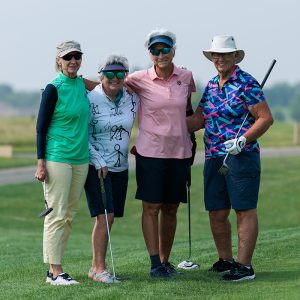
Senior Games athletes have impressive levels of physical fitness, particularly in aerobic fitness and balance. Research from the Sustained Athlete Fitness Exam (SAFE) shows that Senior Games participants far exceed recommended levels of regular physical activity. Compared to the general population of older adults, they also have lower rates of diabetes and depression – evidence that exercise is medicine and movement is well-being.
Even with these strengths, athletes can improve their performance and overall well-being by embracing a wellness mindset.
Perform Better Through Whole-Person Wellness
It’s well known that fitness supports strong athletic performance. However, one area that has gained significant attention in the athletic world is mental well-being.
The sports community has openly recognized how stress, life challenges and emotional strain have impacted Olympians across sports.
This directs us to reflect: How many athletes in the past may have struggled silently? And how different could their experience have been if mental well-being were not stigmatized?
A wellness mindset acknowledges that you bring your whole self – body, mind, emotions and life circumstances to the field of play.
Dimensions of Wellness
When we recognize the strong link between physical conditioning and mental health, it becomes clear that a broader wellness approach can enhance athletic performance. A wellness mindset that includes the following is key to achieving your best:
- Physical fitness
- Mental and emotional well-being
- Social connection
- Spiritual well-being
Looking at wellness holistically can be especially valuable for older adult athletes. Tools like a personal assessment show your strengths and identify areas for additional support.
Using a Personal Wellness Assessment
A personal self-assessment measures overall wellness at a given time. One example is the Wellness Compass, which evaluates:
- Relationships
- Emotions
- Spirituality/rest/play
- Vocation/organization
- Resilience
- Care for the body
If you’ve used the Wellness Compass before, now is a great opportunity to compare your current results with past scores. Reflect on how current results relate to your previous Senior Games performances.
Developing a wellness mindset encourages athletes to take a comprehensive view of their potential. This supports a healthier lifespan and health span and strengthens the foundation for higher performance.
As the year ends, investing time in a wellness review is an effective way to prepare for your next competition season. A whole-person approach not only enhances performance but also enriches your athletic journey.
- Published in Health & Well-Being
How Senior Games Athletes Show the Power of Sport
By Andrew Walker, MPH; NSGA Director of Health & Well-Being
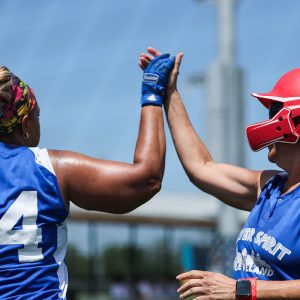
During this season of gratitude, we are thankful for how Senior Games athletes demonstrate the power of sports—the power to unite, inspire and spark social change.
Senior Games athletes inspire as they train and compete. They contribute to research on healthy aging so others can follow their example. They support their competitors. They showcase a new perspective on aging.
Simply put, they make a mark on communities everywhere.
Fostering Belonging and New Event Milestones
The National Senior Games celebrate the ability of older adults to thrive through sports. The Games welcome all to work for their personal best while being part of something bigger than themselves.
The latest National Senior Games, held this summer in Iowa, created a space for thousands of athletes over 50 to connect and compete. So many participants registered that it became the second largest National Senior Games in history.
The athletes also achieved an impressive milestone in sports equity with equal numbers of men and women participating!
The Awe Effect
Spectators at the National Senior Games were awed by the athletes’ skill and competitive spirit. Watching The Games is inspiring, and research shows that experiencing awe can enhance well-being. Being part of a sports environment for older adults is empowering. It creates a ripple effect of positivity that extends beyond the playing field.
Sports have long been a global connector. “Camaraderie” is a word we hear often when athletes describe what makes Senior Games special. The friendships made are one-of-a-kind.
Those connections can have a direct impact on health. Research from the Sustained Athlete Fitness Exam (SAFE) shows that National Senior Games participants experience positive psychological benefits and lower self-reported levels of depression.
Gratitude
The Senior Games will continue to be a leader in promoting individual and collective well-being during this UN Decade of Healthy Ageing. We honor the athletes, volunteers, staff and supporters who make the Senior Games a powerful force for aging well through sports. Their contributions of time, talent and generosity are what make the Senior Games matter. We appreciate the difference they make.
- Published in Health & Well-Being
Understanding Ageism and How You Can Promote Age Inclusivity
By Andrew Walker, MPH; NSGA Director of Health & Well-Being
Older adults often experience ageism—being stereotyped or discriminated against in ways that negatively impact their health and well-being. In recognition of Ageism Awareness Day, the American Society on Aging (ASA) recently shared key findings on the impact of ageism:
The Impact of Ageism
- Financial well-being: Older workers face longer periods of unemployment, hiring discrimination and fewer professional development opportunities.
- Health care: Ageism in medicine can lead to misdiagnosis, denial of treatment options and inadequate management of pain or mental health conditions.
- Media representation: Only an estimated 5–10% of marketing budgets target people over 50, despite their growing influence and spending power.
- Perception and longevity: Older adults with positive self-perceptions of aging live, on average, 7.5 years longer than those with negative perceptions. Optimism and positive views of aging are directly linked to better health outcomes.
- Mindset matters: “The single most important factor in determining longevity—more important than gender, income, social background, loneliness, or functional health—is how people think about and approach the idea of old age,” notes Dr. Becca Levy.
Senior Games events across the U.S. celebrate age inclusivity. They showcase how active aging enhances personal well-being and strengthens communities. Together, we are role models for what it means to thrive at every age—and our collective voices are powerful advocates for a more age-inclusive society.

How You Can Amplify an Age-Inclusive Society
- Share knowledge: Follow and share ASA resources and posts to raise awareness about ageism.
- Tell your story: Help others understand what aging really looks like. What do people get wrong about your age or experience?
- Model inclusivity: Use ASA’s communication guide to highlight how age-inclusive thinking benefits everyone.
- Promote positive images: Share realistic, inspiring photos of older adults being active, like the ones we share on the National Senior Games Facebook page. You can also explore highlights from the 2025 National Senior Games presented by Humana in the photo gallery.
As a member of the Senior Games movement, you are breaking barriers, challenging outdated perceptions and redefining what it means to age actively.
In solidarity with the American Society on Aging, we encourage everyone to take one action this month to amplify the value of a more age-inclusive society. Together, we can change the narrative on aging.
- Published in Health & Well-Being
Better Balance Supports Sports Performance and Daily Living
By Andrew Walker, MPH; NSGA Director of Health & Well-Being

An athlete performs a Tai Chi routine at the 2025 National Senior Games presented by Humana.
The American College of Sports Medicine (ACSM) states that neuromuscular training—alongside cardiorespiratory, resistance and flexibility exercise—is essential for maintaining health. A core component of neuromuscular training is balance, which is especially important for both sports performance and falls prevention in senior athletes.
Good balance is necessary to compete at your best and reduce the risk of falls. Yet, specific balance training is often missing from the routines of many senior athletes. Recognizing this gap, Dr. Becca Jordre, DPT, lead researcher for the Sustained Athlete Fitness Exam (SAFE), emphasizes that balance is not something we maintain automatically as we age—it requires intentional training.
Activities and Drills That Improve Balance
Activities that include integrated movement enhance agility, flexibility, coordination and awareness of one’s body in space. Tai ji, Qi Gong, and yoga are excellent examples of mind-body practices that help athletes improve these abilities. Additionally, simple drills such as single-leg stands, heel-to-toe walking or practicing sport-specific balance challenges can be incorporated into training sessions to strengthen stability over time.
Benefits of Better Balance
The benefits of balance training extend beyond the playing field. By reducing the likelihood of slips, trips, and falls, athletes preserve their independence and sustain their ability to participate in the sports and activities they enjoy. Better balance also translates into more efficient movement patterns, improved reaction times, and greater confidence—key elements of both performance and everyday living.
Falls Prevention Awareness Day
The National Senior Games Association partners with the National Council on Aging (NCOA) to promote Falls Prevention Awareness Day, held annually on the first day of fall—Sept. 23 this year. Athletes and supporters alike are encouraged to advocate for falls prevention, share resources and encourage peers to take steps that reduce risk and promote long-term health. More information can be found at NCOA.com.
- Published in Health & Well-Being
Optimal Aging at the 2025 National Senior Games
By Andrew Walker, MPH; NSGA Director of Health & Well-Being

An athlete tests their balance during the SAFE exam at the 2025 Games. Image via Sustained Athlete Fitness Exam Facebook page.
The Senior Games movement celebrates active aging, fosters social connection and empowers older adults by providing opportunities to engage in competitive sports. A key part of our health and well-being goals for the 2025 National Senior Games presented by Humana was to offer activities that both celebrated active aging and provided valuable athlete services.
In addition to being the largest qualified multi-sport event in the world for individuals 50 and older, the Senior Games leverages its platform to promote optimal aging for athletes, participants and the host community during our biennial sports festival.
Athlete Services and Community Well-Being Events
Throughout The Games, athletes participated in the Sustained Athlete Fitness Exam (SAFE), receiving complimentary assessments of cardiovascular, muscular, flexibility and balance fitness. Each participant also received personalized performance guidance from expert physical therapists.
A screening of the “Team Dream” documentary highlighted the inspiring journey of two women training to compete in The Games, sharing both their personal experiences with accessibility in public swimming pools and celebrating the achievements of pioneering women athletes from the pre–Title IX era. An engaging panel discussion with the film’s subjects, Ann Smith and Madeline Murphy-Rabb, followed.
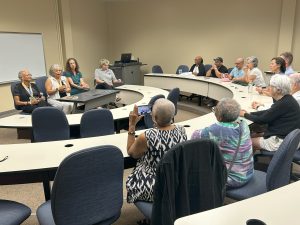
Team Dream screening and panel discussion.
Hundreds of athletes, families and community members joined Optimal Aging Day in Iowa, participating in health screenings, interactive learning activities and wellness education. This event was made possible through partnerships with the University of Iowa Csomay Center for Gerontological Excellence, University of Iowa Injury Prevention Program, Iowa Department of Veterans Affairs, Iowa Public Health Association, National Council on Aging, Des Moines Area Community College, Drake Osher Lifelong Learning Institute (OLLI) and the Midwestern Alzheimer’s Association.
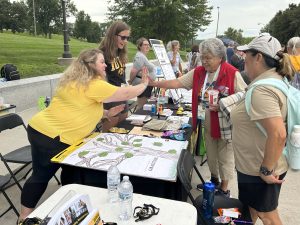
Optimal Aging Day in Iowa in front of the state capitol building.
U.S. Olympians Thomas Hill (1972) and Ed Banach (1984), along with USA Badminton Medical Lead Dr. Rajeev Trehan, shared mental performance strategies designed to help athletes enhance focus, manage competition stress and improve results.
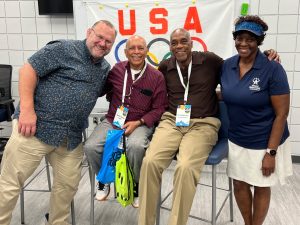
Left to right: Ed Banach, Dr. Rajeev Trehan, Thomas Hill and Carla Ruff.
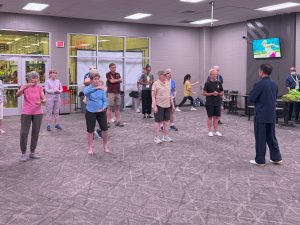
Tai Chi also made its debut as an official sport at the 2025 National Senior Games presented by Humana. On July 25, Master Kevin Sun led a fundamentals workshop for registered tai chi competitors and hosted a specialized seminar for Taiji for Health instructors seeking certification. (Here’s why all athletes should try tai chi.)
- Published in Health & Well-Being
Sharpen Your Competitive Edge with Mindfulness
By Andrew Walker, MPH; NSGA Director of Health & Well-Being

To compete well at the 2025 National Senior Games presented by Humana, you need to be both physically and mentally prepared. With The Games starting July 24, your foundational training phase should ideally be complete, and you may be aiming for a personal record. But peak performance doesn’t come from physical training alone. Success in any sport also depends on concentration, relaxation and deep focus.
Like Olympians and Paralympians, Senior Games athletes can benefit from brain-based performance training and mental well-being strategies.
We’ve all heard phrases like “keep your head in the game,” “stay in the moment,” or “focus on your play.” These are all ways of saying the same thing: be more mindful.
A Deeper Dive into Mindfulness
Sports psychologist Dr. Caroline Silby notes that mindfulness meditation can be especially helpful for athletes experiencing performance anxiety. During competition, minimizing distractions and staying present can make all the difference. Mindfulness strengthens your ability to focus and is one of the most effective tools for building mental resilience on game day.
Simple—but Requires Practice
Although mindfulness isn’t complicated, it does require regular practice. Expert Dr. Jon Kabat-Zinn emphasizes that anyone can begin by simply noticing the present moment. Wherever you are right now, take a moment:
- What do you feel?
- What do you see?
- What do you hear?
Practicing this kind of awareness, again and again, lays the foundation.
Next, deepen the practice by focusing on your breath.
Notice how your body moves as you breathe in and out. Feel the air flow through your nose. Listen to your breath. Start with just five minutes of mindful breathing.
Learn More During an Athlete Enrichment Session
You can build on these skills during the National Senior Games in Iowa. I invite you to join me and U.S. Olympians at our athlete enrichment session, “Competition Tips from Olympians and Mindfulness Meditation,” on Wednesday, July 30, at 6:30 p.m. Learn practical strategies to sharpen your focus, manage stress, and enhance your performance on and off the field. View location and other details on the special events page.
- Published in Health & Well-Being