


By Andrew Walker, MPH; NSGA Director of Health & Well-Being
Society tells us that cognitive decline is a given as we age. Science is showing otherwise.
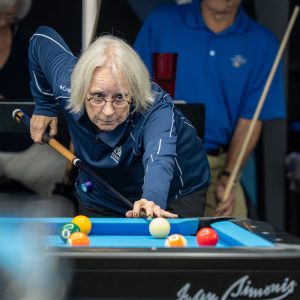
Billiards competition at the 2025 National Senior Games presented by Humana.
Like all older adults, Senior Games athletes want to remain independent as long as possible. Taking care of your mental well-being and brain health will help you do that, while also maintaining your quality of life and athletic performance.
More Than Concussion Protocols
When you think of protecting brain health, things like head injuries or concussion protocols may come to mind. But taking care of your brain health goes beyond staying safe on the field.
A two-year clinical trial by the Alzheimer’s Association found that a program of regular physical exercise, cognitive and social challenge, health monitoring and nutrition improved cognitive health in all participants – people ages 60-79 at increased risk for cognitive decline.
The “brain health recipe” developed from the findings can help you stay sharp and independent throughout your lifetime.
- Physical Exercise: 30-35 minutes of moderate-to-intense aerobic activity four times a week, plus strength and flexibility exercises twice a week. Although many Senior Games athletes get more than adequate physical activity, not all sports reach the moderate-to-high-intensity aerobic level followed in the study.
- Health Monitoring: Regular check-ins on blood pressure, weight and lab results.
- Nutrition: Adherence to the MIND diet, which emphasizes dark leafy greens, berries, nuts, whole grains, olive oil and fish.
- Cognitive Exercise: Using a computer-based brain training program three times a week for 30 minutes, plus other intellectually challenging and social activities. Ideally, you want to participate in engaging and stimulating activities that involve new things and experiences. Many senior centers offer the opportunity to play challenging games. Organizations like the Osher Lifelong Learning Institute (OLLI), also offer a way to take unique non-credit classes at universities.
Evaluate Your Brain Health Habits
Taking the Brain Health Habit Builder Assessment from the Alzheimer’s Association is a great place to start in supporting your brain health. This free online tool assesses how your health habits contribute to protecting your memory and thinking. You receive personalized results and feedback that allows you to build an action plan.
Taking care of your brain is just as important as training your body. Take it from National Senior Games Pickleball athlete and Humana Game Changer Pamela Deloatch. “I think physical health and mental health are all very important, and just making sure that I’m doing something that is exercising my brain all the time, whether it’s trying to figure out a pickleball strategy or understand a crochet pattern or something social,” she shares. “All those things are instrumental to having an enjoyable life that’s also healthy.”
By combining regular targeted physical activity with healthy eating, cognitive challenges and routine preventive self-care, you can protect your memory and sharpen your thinking.