

By Andrew Walker, MPH; NSGA Director of Health & Well-Being
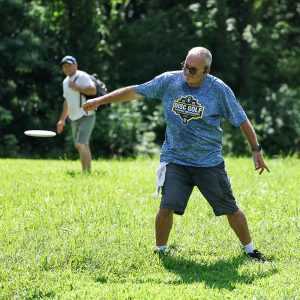
A disc golf player at the 2025 National Senior Games presented by Humana.
People are living longer than ever before, yet men continue to have shorter lifespans than women. On average, women live five years longer than men. Men have higher death rates from heart disease, certain cancers and suicide.
Multiple factors contribute to differences in life expectancy. Contrasting the lifestyles of men and women gives us clues to what contributes to the discrepancy.
Research shows that men often ignore early signs of illness, delay seeking treatment, deny the need for mental health support and are not as engaged as women in self-care. These habits can have a significant impact on health span and longevity.
The Health in Aging Foundation, an organization of health providers dedicated to older adult quality of life, points out that a leading reason for the “longevity gap” between men and women is that men do not take care of themselves as well as women.
This June, in recognition of Men’s Health Month, we encourage all men, along with those who care for them, to make self-care a priority.
Know Your Family Health History
Knowing your family history is central to caring for yourself. While we cannot choose the traits we inherit, we can take action to manage risk factors. Start by using the My Family Health Portrait to track health challenges that run in your family.
Test Your Men’s Health Knowledge
A basic understanding of men’s health is another step toward optimizing self-care. Take this quiz to improve your understanding of men’s health.
Follow Age-Specific Health Recommendations
Just as Senior Games competitions are organized by age, health needs change throughout life. The MyHealthfinder tool provides personalized recommendations based on your age and sex, including suggested screenings, vaccines and preventive services.
The My Family Health Portrait and the MyHealthfinder interactive tools are also valuable resources for women.
Health Tips for Older Men
The Health in Aging Foundation highlights the following health tips for all older men. Find more guidance on their website.
- Get checked out. See your healthcare provider regularly.
- Seek care when you are sick. Do not wait for symptoms to worsen before contacting a healthcare provider.
- Take medications, vitamins and supplements only as directed.
- Get your shots, such as the flu and shingles vaccines.
- Exercise your brain.
- Spend time with others.
Older male athletes should especially take to heart the first two tips to address health concerns promptly. In one survey, 40% of men said they would delay seeking medical care for a few days if they were sick. And 17% said they would wait “at least a week.”
Initial treatment is more likely to lead to positive outcomes and a favorable return to action. Sports injuries should be evaluated by healthcare providers like a physical therapist or athletic trainer.
Men who embrace learning about their health and practice self-care can increase their odds of having a healthier lifespan. For Senior Games athletes, self-care also supports training, recovery and athletic performance.
By making self-care, prompt treatment of injuries and preventive care a priority, older male athletes can improve their quality of life and chances of achieving their personal best, both on and off the field of play.
