


By Andrew Walker, MPH; NSGA Director of Health & Well-Being
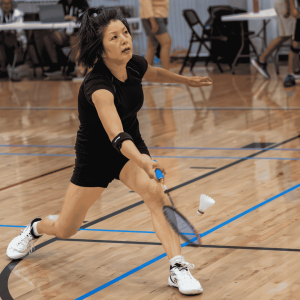
When was the last time you specifically trained your balance?
If you’re like many of us, the answer may be, “I don’t really know.” We exercise to build strength, improve endurance, stay flexible and keep moving — but balance is often left off the workout list. A well-rounded athletic fitness training program includes strength, endurance, flexibility, agility, reaction time and balance training.
Give Your Brain a Balance Challenge
In addition to being essential for performing well in Senior Games sports, balance training may also contribute to brain health. Participating in a sport may look simple, but your brain is doing a lot of work to coordinate your movements.
“Balance training isn’t just about staying steady on your feet. It’s a workout for your brain too,” explains Dr. Vonetta M. Dotson, Ph.D., Chief of Neuropsychology at Mass General Brigham. “Every time you challenge your balance, you’re engaging attention, spatial processing and coordination systems at the same time. This is exactly the kind of multitasking that supports long-term brain health.”
The magical movement of the body during sports captures our attention when we witness amazing Olympic performances, the finals in college sports and the awe-inspiring moments of National Senior Games competition.
Your brain is constantly receiving information from your eyes, inner ears, muscles and joints. It uses that information to figure out where your body is in space, and then tells your muscles how to respond. This ability to know where your body is in space is called proprioception. It is one of the important functions that helps us move smoothly and safely.
Balance Matters for Everyday Life and Sports
Good balance is especially important for older adults because falls can have a major impact on health, independence and quality of life.
Dr. Becca Jordre, PT, DPT, Ph.D., creator of the Sustained Athlete Fitness Exam (SAFE), found that about 10% of Senior Games athletes report a fall during a year, compared with about 30% of the general population of older adults. This reminds us that staying active and fit can be an important part of healthy aging. Even athletes, however, don’t always train their balance specifically.
Ready to Try It? Use These Resources
Explore the following balance exercises, videos and resources for training ideas:
- Read this SAFE handout on sustaining balance fitness. (PDF)
- Try these balance training exercises from ACE. (Video)
- Eventually, you can introduce a mental challenge, such as responding to a verbal cue or counting backward while performing a balance exercise. Watch a demonstration with a National Senior Games athlete. (Video)
Pick one and give it a try. Start where you are, progress at your own pace and enjoy discovering what your body — and your brain — can do.
Make This Fall the Season for Balance Training
The National Senior Games Association encourages athletes and older adults everywhere to recognize the importance of balance and fall prevention. National Falls Prevention Awareness Day, sponsored by the National Council on Aging, is observed on the first day of fall and is a great reminder to add balance training to your routine.
So, this fall, give yourself a new fitness goal: balance. It’s something you can train, and it’s never too late to get started.
Visit the NSGA health and well-being blog for more resources to support your active aging journey.